Step Guide
Five-Phase Room Mapping Process
Follow these phases sequentially to build a layout blueprint tailored to your specific room dimensions and light sources.
Measure Room Boundaries
Record wall lengths, window positions, door swing directions, and fixed fixtures. Note ceiling height if considering monitor arms or shelving above the desk.
Map Window Glare Patterns
Track sunlight direction at morning, midday, and afternoon intervals. Place the monitor perpendicular to the primary window or use adjustable blinds to diffuse direct light.
Define Walking Clearance
Reserve a minimum 90 cm path behind the chair and 60 cm beside the desk for comfortable movement without cable interference.
Place Secondary Lighting
Position ambient sources to the side of your monitor — never directly behind the screen. A task lamp on the opposite side of your writing hand reduces shadow on documents.
Verify Cable Routes
Plan cable paths along desk legs or through grommets before finalising furniture placement. Avoid routes that cross primary walking paths.
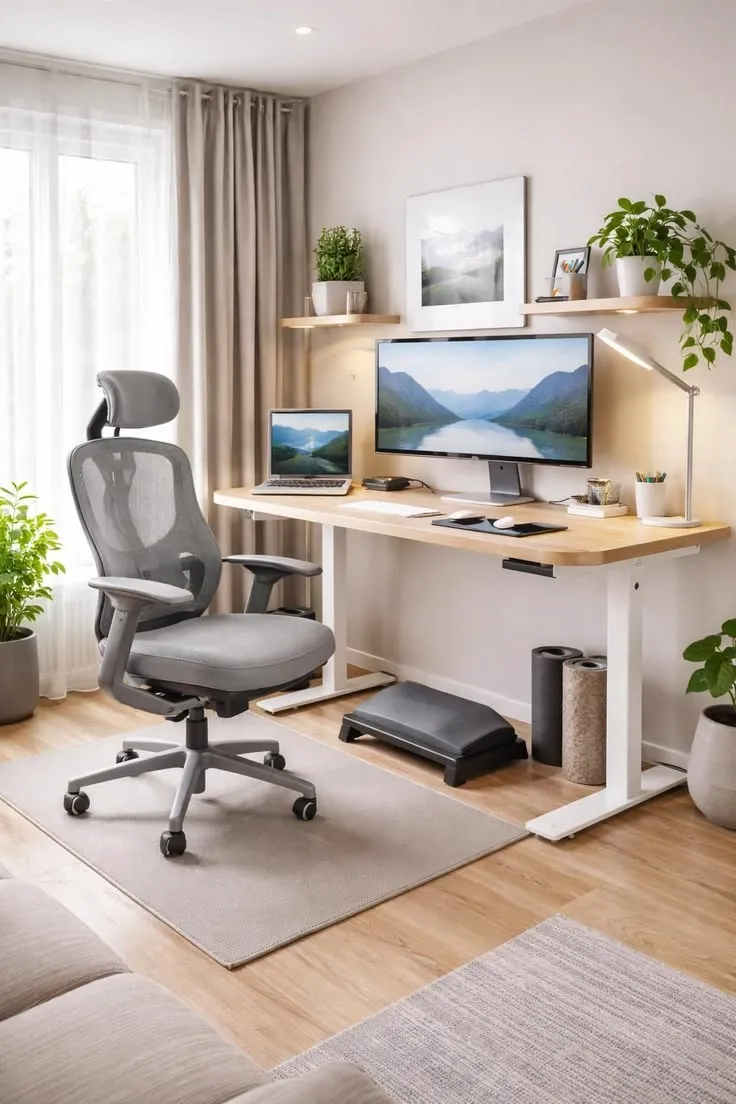
Perpendicular desk orientation reduces direct sunlight reflection on screen surfaces.
Window Analysis
Desk Angles Relative to Glare
When a window sits directly behind your monitor, backlighting creates contrast issues that strain visual focus. Rotating the desk 90 degrees shifts the light source to your side profile.
If room geometry prevents rotation, consider matte screen filters and adjustable horizontal blinds set to 45-degree angles during peak sunlight hours.
Ambient Paths
Secondary Lighting Placement
Overhead ceiling lights alone often produce uneven illumination across a desk surface. Supplement with a directional task lamp positioned at 45 degrees from your dominant hand side.
Wall-mounted sconces or floor lamps placed behind the monitor line add depth without creating screen reflections.
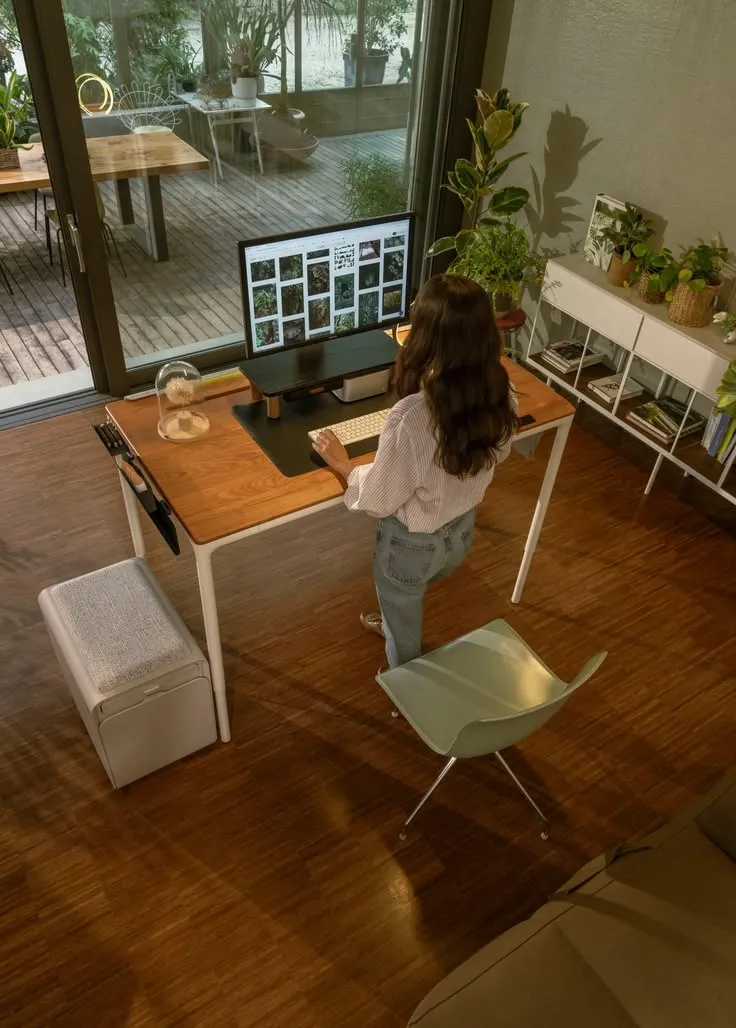
Combined overhead and task lighting creates even workspace illumination.
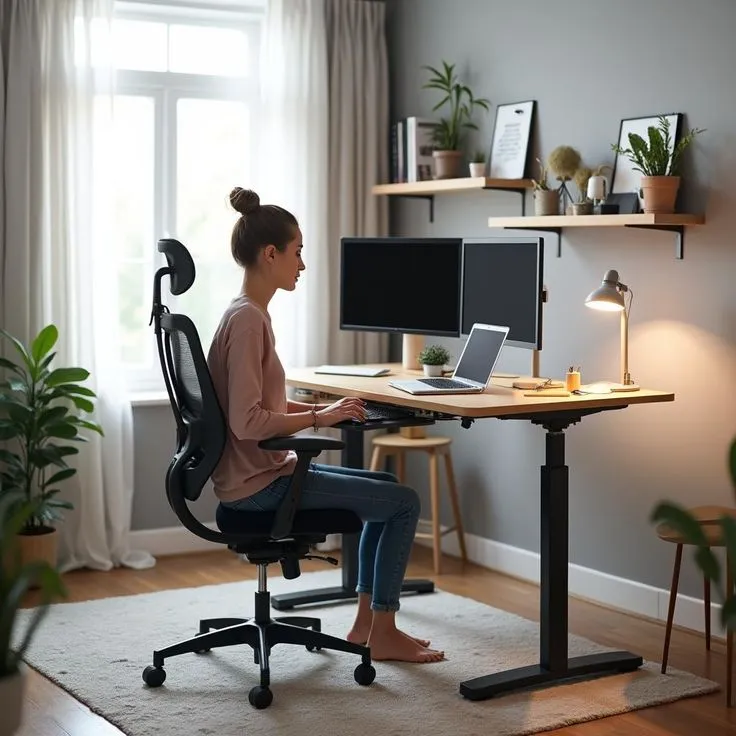
90 cm behind-chair clearance supports unobstructed room movement.
Clearance Matrix
Minimum Zone Requirements
Need Help With Your Layout?
Contact our team for general guidance on room planning or browse the gear auditor for hardware specifications.